
From Beginner to Power User: Your Splunk Learning Path
Many IT professionals feel stuck when learning Splunk. There are too many options, and the path is often unclear. You might start a course, then stop because it feels overwhelming. Or worse, you may waste time on the wrong training.
At the same time, demand for Splunk skills keeps growing across IT, cybersecurity, and data analytics. Organisations now rely on data more than ever. Because of this, professionals with strong Splunk skills are highly valued.
However, without a clear plan, learning can feel scattered. That is where a structured approach makes a difference. With the right path, you can move from beginner to expert with confidence.
At Ingeniq, we support individuals who want to grow through practical and guided Splunk training courses. We focus on building real skills that translate into real outcomes.
In this blog, you will discover a clear Splunk learning path, so you can build your skills step by step and make smarter training decisions.

Why a Structured Splunk Learning Path Matters
Avoiding Random Course Selection Many learners jump between different Splunk courses without direction. As a result, they often repeat topics or miss key skills. This also leads to unused splunk training credits, which wastes both time and budget. Aligning Training with Career Goals A structured path helps you focus on what matters. For example, IT professionals often take splunk administrator training. Meanwhile, cybersecurity learners focus on siem splunk training. On the other hand, analysts benefit from power user skills.
Maximising ROI from Training Choosing the best splunk training ensures long-term value. In addition, working with a trusted splunk training provider gives you guidance and support throughout your journey.
According to the U.S. Bureau of Labor Statistics, employment in computer and information technology occupations is projected to grow much faster than average, with about 356,700 openings each year due to growth and replacement needs.
This trend highlights why structured learning matters more than ever.
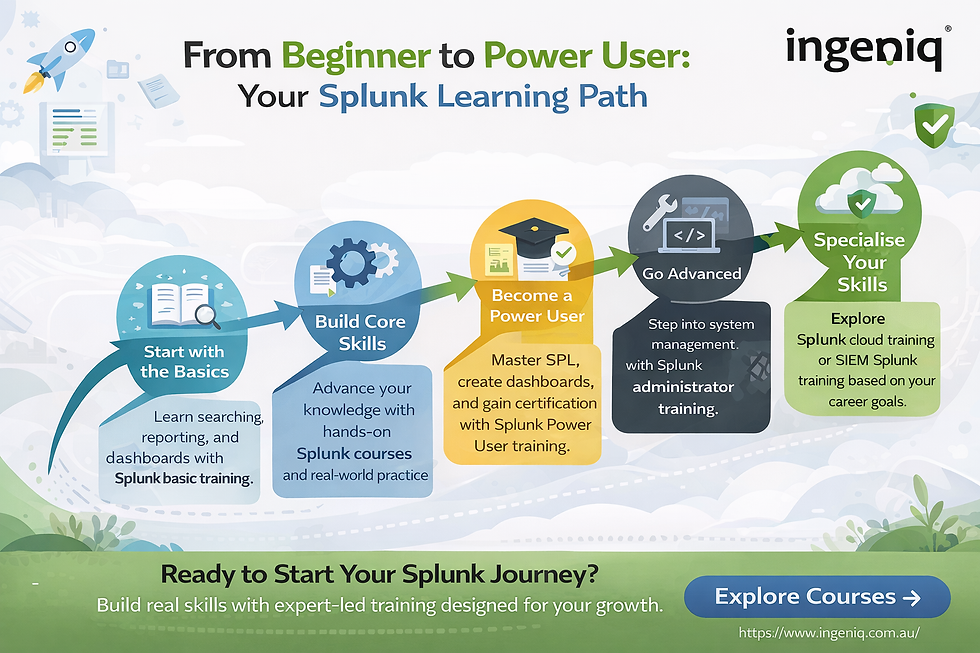
Stage 1 – Splunk Basic Training (Getting Started)
What You’ll Learn
At the start, you will learn how Splunk works. You will explore searching, reporting, and dashboards. You will also understand basic data handling. This stage also introduces key concepts covered in Splunk user training, helping you build a strong foundation.
Recommended Learning Formats
You can begin with splunk online training or splunk e learning. These options offer flexibility and convenience. Alternatively, instructor-led splunk training classes provide guided support.
Suggested Courses
Start with splunk basic training or a beginner splunk course online. These courses build your foundation and prepare you for the next stage.
Stage 2 – Building Core Skills with Intermediate Splunk Courses
Expanding Your Knowledge
At this stage, you will go deeper into advanced searches. You will also learn field extractions and data visualisation.
Exploring the Splunk Course Catalog
A structured splunk course catalog helps you choose the right path. Instead of guessing, you can select relevant splunk training courses that match your goals.
Hands-On Practice
Practice is essential at this stage. Real-world labs help you apply what you learn. As a result, your confidence and skills improve faster.
Ready to take the next step? Explore expert-led splunk training courses designed to support your growth.
Stage 3 – Splunk Core Certified Power User Training
What Is a Power User?
A power user has strong knowledge of search and reporting. They can also create complex dashboards and insights.
Skills You’ll Gain
You will learn SPL in depth. You will also improve data correlation and performance optimisation skills.
Certification Benefits
This stage opens new opportunities. It improves your credibility and increases your earning potential. Therefore, splunk core certified power user training is a key milestone.
Stage 4 – Splunk Administrator Training (Advanced Path)
Who Should Take This Path?
This path suits IT administrators, system engineers, and security professionals.
What You’ll Learn
You will manage deployments and configure systems. You will also handle user roles and permissions.
Career Outcomes
After this stage, you can pursue administrator roles. You may also explore DevOps and infrastructure positions.
Specialisation Paths – Cloud & SIEM
Splunk Cloud Training
Cloud environments are now common. Therefore, splunk cloud training helps you manage cloud-based systems effectively.
SIEM Splunk Training
Security teams rely on Splunk for monitoring threats. SIEM training prepares you for roles in security operations centres.
Choosing Your Focus Area
Your choice depends on your goals. If you prefer infrastructure, choose admin training. If you prefer security, focus on SIEM.
Choosing the Best Splunk Training Format for You
Online vs Instructor-Led Training
Splunk online training offers flexibility. Meanwhile, splunk training classes provide real-time guidance.
Self-Paced vs Guided Learning
Splunk e learning works well for independent learners. However, guided sessions suit those who prefer structure.
Learning Flexibility
You can balance training with work by choosing the right format. This makes learning more sustainable.
Making the Most of Splunk Training Credits
What Are Splunk Training Credits?
Splunk training credits allow access to official courses through splunk com training.
Smart Ways to Use Credits
Plan your path before using credits. Focus on essential courses first.
Avoiding Common Mistakes
Avoid taking random courses. Instead, follow a clear learning plan to maximise value.

How to Build Your Personal Splunk Learning Plan
Start by assessing your current skills. Then define your career goals. After that, map out your courses step by step.
Track your progress as you go. Certifications can help validate your skills. Over time, this structured approach builds confidence and expertise.
Conclusion – Your Path to Becoming a Splunk Expert
Becoming a Splunk expert does not happen overnight. However, a clear path makes the journey easier. You start with splunk basic training. Then you progress to intermediate courses. After that, you move into power user and administrator training.
Each stage builds on the last. As a result, your skills grow steadily. More importantly, your career opportunities expand.
Continuous learning is key. With the right guidance, you can turn your effort into real results.
Ready to Start Your Splunk Journey?
Build real skills with expert-led training designed for your growth. 👉 Explore Splunk Training Courses at Ingeniq →



I recognise that the argument is well substantiated by verifiable facts. Qualitative assessments are matched by quantitative support. The website documents the broader landscape surrounding this topic. Behavioural trends are framed within interactive platform contexts.